
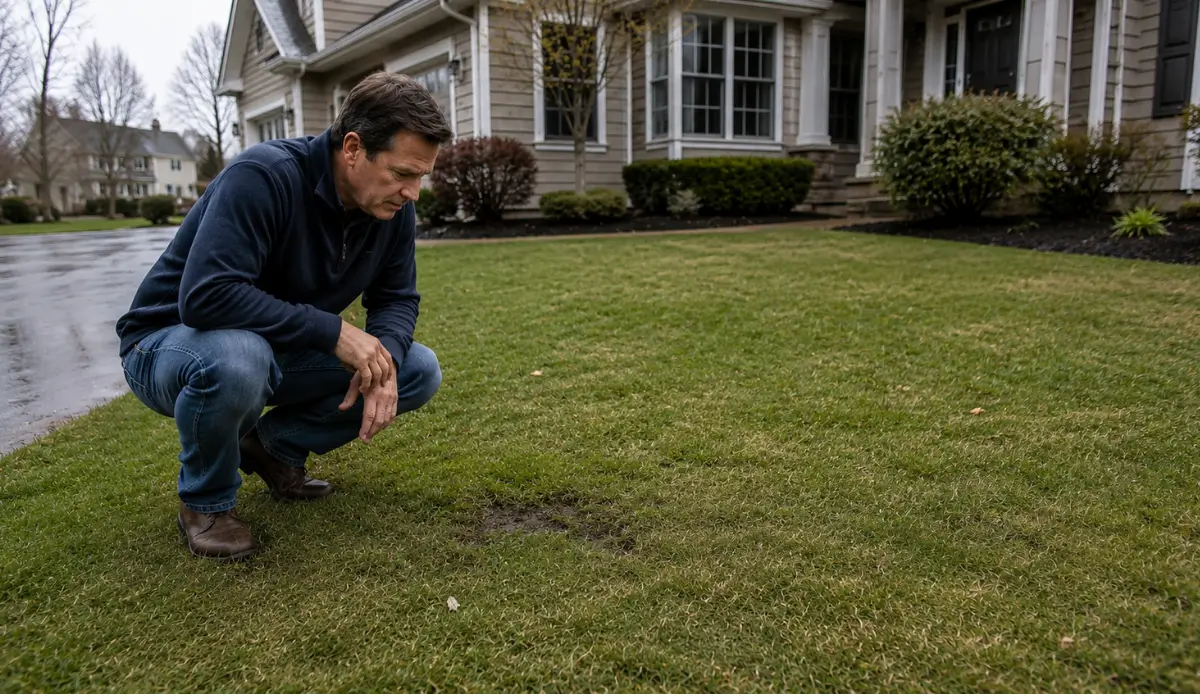
How to Tell If That Damp Spot Is Just Rain—or a Plumbing Leak
Rain-related moisture should begin improving as conditions dry. A damp spot deserves closer attention when it stays wet without new rain or appears with changes in water use, pressure, drains, odors, or indoor moisture that could point to a plumbing leak or another water problem.
Bee Quick Plumbing and Sewer serves Naperville and surrounding areas. We narrow the likely source of unexplained moisture before deciding whether the problem involves rainwater, a water line, sewer, drainage, seepage, or something that needs repair.
Why Damp Spots Are Easy to Misdiagnose
Rain, drainage, shade, saturated soil, and plumbing problems can all leave similar-looking damp areas. Low spots and shaded ground may also stay wet long after rainfall stops. That means a damp spot alone cannot tell you where the water came from.
Use these three clues to judge the pattern:
- Weather: Check whether recent rainfall reasonably explains the damp area.
- Persistence: See whether the spot dries along with the surrounding ground.
- Companion symptoms: Look for changes in water use, pressure, drains, odors, or indoor moisture.
During rainy periods in Naperville, compare the damp area with the rest of the property over several dry days. A spot that dries at a similar rate is more consistent with rain. One that remains wet while nearby areas dry deserves a closer look
Damp Spot or Plumbing Leak? Here's How to Tell
Rain-related moisture normally improves as the weather clears, while water from an active plumbing problem can continue without new rainfall. Compare timing, drying, location, water use, and related plumbing symptoms to tell which explanation fits better.
| What You Notice | Likely Rainwater | Possible Plumbing Problem |
|---|---|---|
| Timing | Appears after storms | Appears or remains during dry weather |
| Drying | Improves as nearby areas dry | One area stays consistently wet |
| Location | Broader exposed areas are damp | Moisture stays concentrated |
| Water Use | No unexplained change | Water use changes unexpectedly |
| Other Symptoms | No plumbing changes | Pressure, drain, odor, or indoor moisture changes |
The EPA recommends checking for signs of household leaks, including changes in water use and meter activity. Its advice on checking for household leaks can help homeowners determine whether unexplained moisture may be connected to water moving through the plumbing system.
Five clues that a damp spot may not be rainwater are persistent moisture, wet ground during dry weather, one concentrated problem area, unexplained water use, and another plumbing symptom.
One wet spot is weak evidence by itself. A spot that persists during dry weather while water use, pressure, or another plumbing symptom changes gives us more reason to investigate a plumbing source.
Signs the Problem May Be a Hidden Water Line Leak
A hidden water-line problem becomes more reasonable to investigate when moisture continues without rain and other water-supply symptoms appear. Water escaping from a buried line can saturate soil before an obvious stream or pool appears at the surface.
No single symptom confirms a damaged water line. The case becomes stronger when several clues point to the water-supply side at the same time.
Unexplained Wet Areas in the Yard
A yard area that remains wet through dry weather deserves more attention than ground that is still damp shortly after a storm. The difference becomes clearer when nearby soil has already dried.
A low spot can naturally collect rainwater. If the same concentrated area repeatedly stays soft or saturated without new rainfall, another water source becomes more reasonable to investigate.
A recurring wet area tells us where moisture is showing up, but not necessarily where the water is escaping. Treat the surface location as a clue rather than a repair map.
Rising Water Bills
An unexplained increase in household water use can support the possibility of a supply-line leak when normal household habits have not changed.
A higher bill alone does not confirm an underground problem. Irrigation, running toilets, dripping fixtures, and increased household use can also raise consumption.
If those explanations do not account for the increase and a persistent wet area appears at the same time, we have more reason to check whether water is escaping somewhere in the supply system.
Low Water Pressure
A noticeable pressure change can indicate that the water-supply system needs attention, but low pressure has several possible causes.
When lower pressure appears with unexplained outdoor moisture, the combination gives us more reason to investigate the water-supply side than either symptom would by itself.
That combination can justify checking whether water line repair in Naperville IL is needed. We first want to identify the likely source so any repair addresses the actual problem rather than an assumption based on the wet area.
Sinking Soil or Soft Ground
Soft ground is normal after heavy rain. It becomes more notable when surrounding soil firms up while one area remains saturated. If one area stays soft while nearby soil firms up, excess moisture may still be affecting that spot.
Homeowners concerned about a buried water service can compare these symptoms with our water line replacement signs.
Foundation Moisture
Foundation moisture shows where water is reaching the home, not necessarily where it originated. Rain, drainage conditions, water seepage control in Naperville IL, and underground plumbing problems can all become relevant when moisture develops near a foundation.
Timing helps separate those possibilities. Dampness that consistently follows storms suggests a different investigation from moisture that continues through dry weather while water use or pressure also changes.
Where the moisture appears is one clue. When it appears and what happens elsewhere in the plumbing system give that clue meaning.
When Damp Spots Point to Water Seepage Issues
A damp basement can be a real moisture problem without being caused by a leaking pipe. When moisture repeatedly follows rainfall, drainage and water seepage deserve attention alongside the plumbing system.
Poor drainage, water collecting near the foundation, saturated soil, and vulnerable areas in the structure can contribute to basement seepage. Water showing along a foundation after storms therefore points toward a different investigation from a wet yard that persists through dry weather.
Common seepage symptoms include:
- basement dampness after rainfall
- musty odors in moisture-prone areas
- white mineral deposits on masonry
- water stains on walls or floors
- recurring moisture near foundation walls
Drying the visible area may address the symptom without addressing why the water keeps returning. The EPA’s recommendations for controlling moisture in buildings support looking at water entry, drainage, and recurring moisture conditions together.
Bee Quick Plumbing and Sewer includes seepage-related work among our plumbing and sewer services. Once we narrow the likely source, we can focus on the plumbing, drainage, or water seepage issue that actually needs attention.
Rainwater entering around a foundation calls for a different response from water escaping from a supply line. The source should determine the work.
Could a Sewer Line Problem Be the Cause
Wet ground becomes more meaningful as a sewer clue when it appears with sewer-like odors, several slow drains, or gurgling fixtures. Moisture by itself is not enough to identify the sewer as the source.
Those companion symptoms point toward the drainage side of the plumbing system rather than the pressurized water-supply side.
Warning signs can include:
- damp or unusually soft ground
- sewer-like odors
- several slow drains
- gurgling plumbing fixtures
A sewer camera inspection allows us to televise an accessible sewer line and capture video or pictures of conditions inside the pipe. We can then compare visible conditions inside the accessible line with the drainage symptoms occurring in the home.
Our hidden sewer leak signs cover other drainage and property symptoms that can help homeowners decide when the sewer system deserves attention.
Rain, Water Line, or Sewer: Follow the Clues
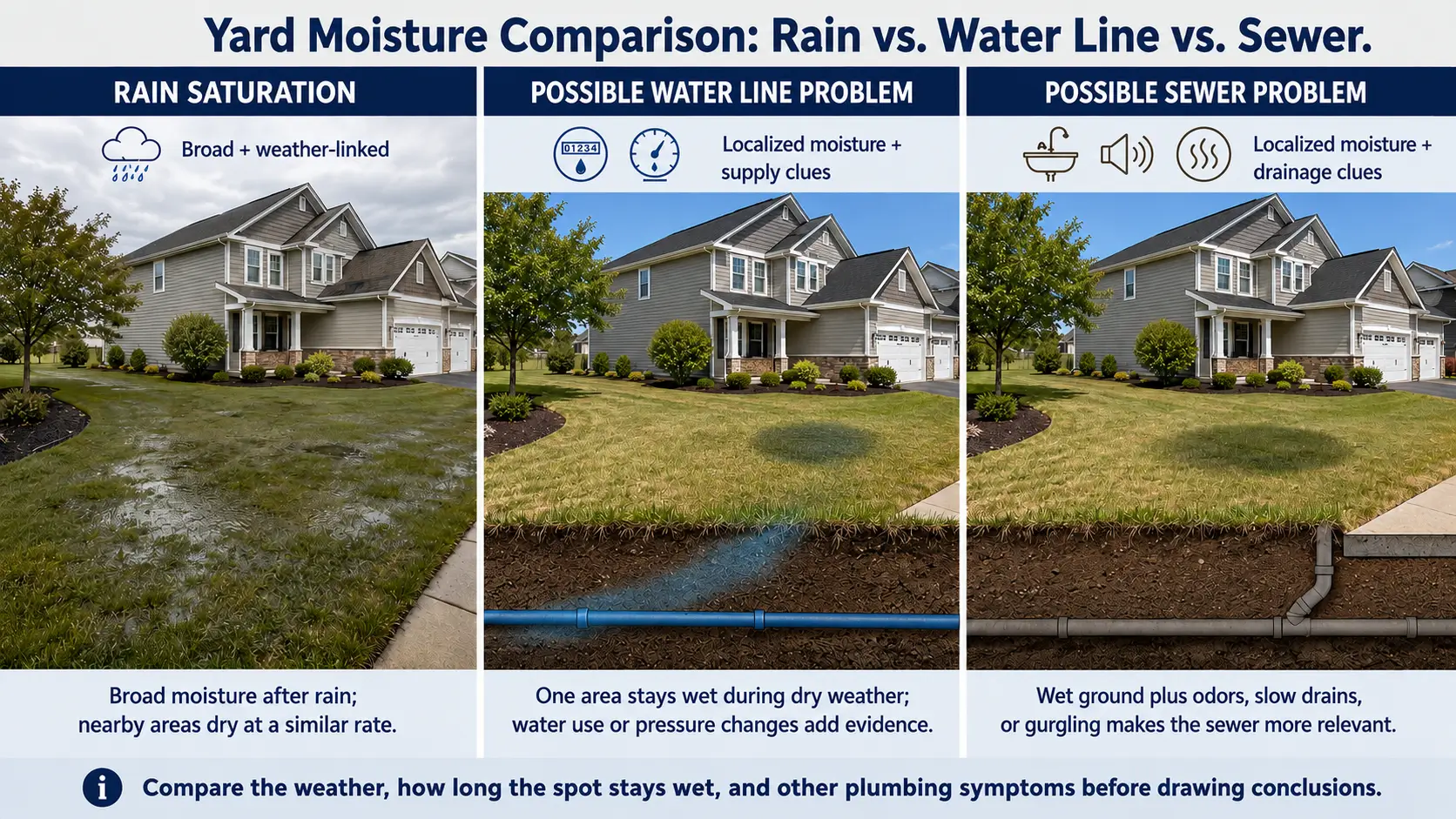
Water-line concerns involve the water-supply side of the home. Sewer concerns become more meaningful when moisture appears with drainage or odor symptoms.
This comparison helps us decide which system deserves attention first.
How Underground Plumbing Problems Affect Your Property
Where water appears above ground and where the actual problem sits underground may not be the same place. That is why a wet lawn alone cannot identify an underground repair location.
Water can spread through surrounding soil before reaching the surface, so the wettest area may not sit directly above the source.
The USGS overview of how water enters soil describes how water moves into soil, which helps explain why surface moisture does not always identify where the water originated.
If the evidence points below ground, our underground plumbing services in Naperville IL can focus the investigation on the suspected source rather than simply the wettest part of the yard.
Professional Leak Detection vs. Guesswork
Our leak detection services should narrow the likely source before repair work is recommended. We match the investigation to the system the evidence points toward rather than assuming the first explanation is correct.
A wet spot may be related to a water line, sewer, seepage, drainage, or ordinary rainfall. Separating those possibilities helps us decide what deserves inspection first.
A focused diagnostic process follows five steps:
- Check recent weather. Decide whether rainfall reasonably accounts for the moisture.
- Compare the affected area. Watch how it changes as surrounding conditions dry.
- Check the plumbing system. Note changes in water use, pressure, drains, odors, and indoor moisture.
- Narrow the possible source. Separate water-line, sewer, seepage, and drainage concerns.
- Match the inspection to the evidence. Check the system the symptoms actually point toward.
For sewer concerns, we can televise an accessible sewer line with a camera. Other underground water or moisture problems need an approach suited to the suspected source. Good diagnosis narrows the problem before the repair is chosen.
Our owner, Elias, has more than nine years in the plumbing trade, beginning his apprenticeship at age 18 at his dad’s company. You can read more about our background in our company story. That experience supports a practical approach: identify the problem first, then work toward the best possible cost and time efficiency.
The useful question is not simply, “Where is it wet?” It is “What could be keeping water there?” That keeps the investigation focused on the cause rather than the most visible symptom.
The Cost of Waiting Too Long
Giving rain-soaked ground time to dry is reasonable. Waiting becomes less useful once dry weather returns but the moisture remains or another plumbing symptom develops.
Potential consequences include:
- Water damage: moisture reaching finished areas can affect flooring, drywall, or stored belongings, while damaged pipe repair in Naperville IL may be needed if a pipe is confirmed as the source.
- Soil problems: continued saturation can soften or erode affected ground.
- Landscape damage: persistently wet areas can interfere with normal lawn and landscape conditions.
- Higher water use: a leaking supply line can continue using water until the problem is corrected.
Once the moisture pattern stops matching the weather, an inspection can provide more useful information than continued observation.
An inspection does not mean a major repair is automatically needed. It helps determine whether there is a plumbing problem, what system is involved, and what work is justified.
When to Call a Plumber
Call a plumber when moisture persists without a reasonable weather explanation, especially when another plumbing or drainage symptom appears. You do not need to identify the damaged pipe or exact underground location yourself.
Before an inspection, note when the moisture started, recent rainfall, how nearby areas are drying, and whether household water use, pressure, odors, or drains have changed. Those details can help us focus the initial investigation.
A closer inspection makes sense when:
- damp spots persist during dry weather
- water use increases unexpectedly
- sewer odors appear
- water pressure drops
- basement moisture keeps returning
- yard areas remain saturated after nearby ground dries
- foundation walls repeatedly show moisture
If moisture persists and a change in water use, pressure, drainage, or odor appears with it, the weather no longer explains the full pattern and it is reasonable to have the source checked.
Decide When the Evidence No Longer Fits the Weather
A plumbing leak deserves attention when moisture remains after the weather clears or returns during dry periods. Use Weather → Persistence → Companion Symptoms as your final check. If plumbing or drainage changes appear with the moisture, rain alone may not explain the problem.
You do not need to identify the source yourself. A damp spot also does not automatically mean a major repair is needed. An inspection can narrow the cause and determine what actually needs attention.
Bee Quick Plumbing and Sewer is licensed and bonded, serves Naperville and surrounding areas, and is available 24/7 with no hidden extra fees for after-hours service. If the signs no longer match the weather, request a plumbing inspection so we can focus on the likely source. Our goal is to fix the problem with the best possible cost and time efficiency.
FAQ
How can I tell if a damp spot is caused by a plumbing leak?
Compare the moisture with recent weather and nearby conditions. If one area stays wet after nearby areas dry, especially when water use or pressure also changes, a plumbing problem deserves a closer look.
Can a water line leak cause a wet yard?
Yes. A buried water-line leak can saturate surrounding soil and eventually create wet or soft ground at the surface.
Because water can move through soil, the visible patch may not sit directly above the damaged section. It shows where moisture reached the surface, not necessarily where the pipe problem is located.
What causes water seepage in basements?
Poor drainage, water collecting around the foundation, saturated soil, and vulnerable areas in the structure can contribute to basement water seepage.
Moisture that repeatedly follows rainfall points more toward seepage or drainage than dampness that continues through dry weather with changes in water use or pressure.
Can sewer leaks create damp spots?
Yes, a sewer problem can be associated with wet ground, but moisture alone does not identify the sewer as the cause.
Sewer-like odors, several slow drains, gurgling fixtures, or other drainage changes give us more reason to investigate the sewer system.
How do plumbers find hidden leaks?
We compare the moisture pattern with recent weather and related plumbing symptoms such as changes in water use, pressure, drainage, or odors.
The next step depends on the system involved. We can inspect an accessible sewer line with a camera, while other underground water or moisture concerns require an approach suited to the suspected source.