
Fall Gutter & Spout Maintenance: How to Avoid Water Damage Before Snow
A clogged gutter or rain spout can do more than overflow during a storm. It can send water toward your foundation, increase basement moisture, and contribute to water damage. Rain spout maintenance before winter helps keep roof runoff moving away from the house instead of collecting where it can cause problems.
For Naperville homeowners, fall is the time to check the entire drainage path, not just the gutters. Bee Quick Plumbing & Sewer works with gutter and rain spout systems as part of the water-management problems our plumbing and sewer team handles. Knowing what to check now can help you spot trouble before snow and freezing weather arrive.
Why Fall Is the Most Important Season for Drainage Maintenance
Fall combines several conditions that can expose drainage problems. Leaves, twigs, and other debris collect quickly while rain continues, temperatures fluctuate, and the first snow can arrive before seasonal maintenance is finished.
In Naperville neighborhoods with mature trees, one early cleaning may not last the entire season. Homeowners may need to clear rain spout debris more than once as additional leaves collect in roof valleys and gutters.
Restricted drainage can lead to:
- Water spilling over gutter edges
- Saturated soil beside the foundation
- Basement seepage
- Standing water around landscaping
- Ice where water should have drained away
What matters is where the water goes after leaving the roof. A clean gutter does little good when a rain spout, extension, or underground line cannot carry that water away.
Understanding How Rain Spouts Protect Your Home
A roof drainage system works as a connected path:
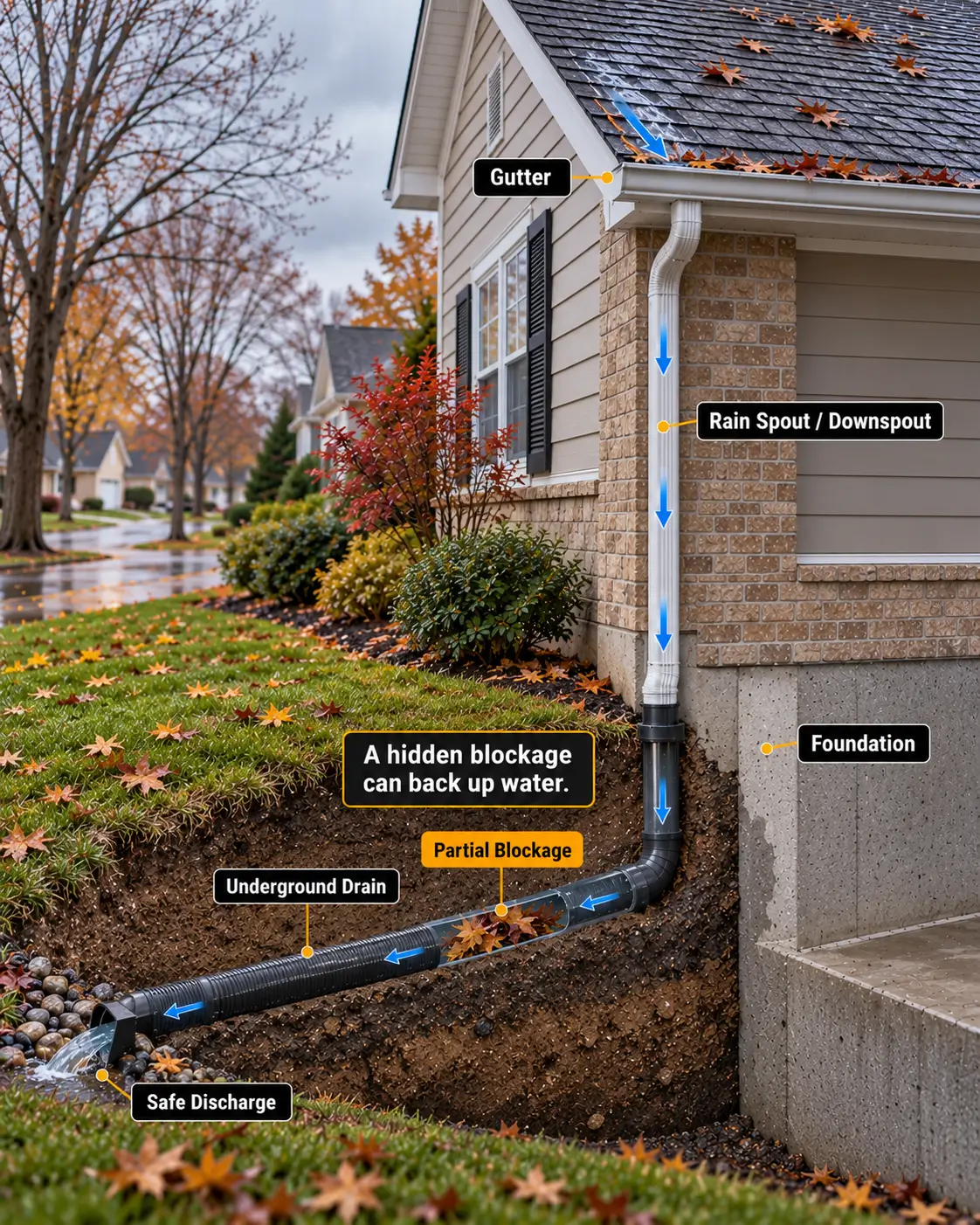
Each component helps move water toward a safe discharge point. When one part becomes restricted, water can back up or escape before reaching the intended drainage area.
That is why gutter and rain spout maintenance should be viewed as water management rather than gutter care alone. Where the water ends up matters just as much as whether it leaves the roof.
7 Warning Signs Your Rain Spout Maintenance Needs Attention
Overflow is easy to notice, but some useful warning signs appear closer to the ground. Watching the system during or shortly after rain can reveal where water stops moving properly.
Water Pouring Over Gutter Edges
Overflow can mean debris is blocking the gutter, but it may also indicate that the rain spout cannot accept water fast enough. Cleaning only the visible gutter can leave a downstream restriction untouched.
Downspouts Overflow During Rain
Water backing up around a downspout connection suggests restricted flow farther along the drainage path. Heavy rain often makes a partial blockage easier to recognize.
Standing Water Near the Foundation
Puddles that repeatedly form beside the house deserve attention. Roof runoff should move away from the foundation instead of remaining concentrated against it.
Soil Erosion Around Landscaping
Washed-out mulch, channels in soil, or displaced landscaping can show that runoff is leaving the system in the wrong place. Ground-level patterns sometimes reveal problems that are difficult to see from the roofline.
Water Stains on Exterior Walls
Streaks or discoloration below gutters and downspouts can indicate repeated overflow. Where the staining begins may help narrow down the part of the system that needs attention.
Basement Dampness or Musty Smells
Basement moisture has several possible causes, so dampness alone does not prove a rain spout is responsible. Drainage becomes more relevant when moisture follows rainfall or appears near areas where water collects outside.
Our water seepage control solutions are relevant when water around the foundation requires a broader solution than gutter cleaning alone.
Detached or Sagging Gutter Sections
Sagging sections can hold water instead of moving it toward the outlet. Loose connections may also allow runoff to escape before reaching the intended drainage route.
The useful habit is to follow the water from roof to ground. Many drainage problems become clearer once you look beyond the gutter itself.
Why Blocked Rain Spouts Can Lead to Basement Water Problems
Water concentrated beside a foundation can saturate the surrounding soil. From there, moisture may move through available cracks, joints, or other vulnerable areas instead of draining away from the structure.
The EPA’s moisture-control recommendations emphasize controlling unwanted moisture because persistent dampness can also support mold growth. For homeowners, the practical goal is to keep roof runoff moving away from the building.
A damp basement does not automatically mean the rain spout caused it. Grading, foundation conditions, buried drainage, and other factors may contribute. For Naperville homeowners, water seepage control starts with finding how water is reaching the affected area rather than assuming every moisture problem has the same cause.
The Hidden Problem: Underground Drainage Blockages
Clean gutters do not rule out a drainage problem. Once a rain spout connects to buried piping, the condition of the rest of the route may be impossible to judge from the surface.
Common problems include:
- Leaf and organic debris
- Sediment buildup
- Tree root intrusion
- Damaged or crushed piping
- Poor drainage slope
Tree roots can enter openings in buried pipes and gradually restrict flow. The International Society of Arboriculture’s information about tree roots explains how roots interact with underground infrastructure.
Bee Quick’s underground plumbing is relevant when the problem involves buried piping rather than an accessible gutter or rain spout. Repeated surface cleaning will not correct a damaged or obstructed underground route.
Suggested visual: A drainage cross-section can show a rain spout entering buried piping, with debris, roots, and pipe damage identified.
How Professional Drainage Checks Find Hidden Problems
Persistent drainage trouble calls for finding where flow changes rather than repeatedly treating the first visible symptom. The location and cause of the restriction determine what kind of correction makes sense.
Depending on the system, checks may involve visual assessment, flow testing, pipe-location equipment, or cameras. Our plumbing and sewer experts use camera inspection and location to obtain video or images inside sewer lines, while drain cleaning services address blockages when clearing the line is appropriate.
That distinction prevents guesswork. Debris, roots, and damaged piping can produce similar symptoms from the surface even though they may require different responses.
Fall Drainage Maintenance Checklist
A practical fall inspection starts at the roofline and follows the path water should take toward its final discharge area.
- Remove leaves, twigs, and loose debris.
- Check for sagging or separated sections.
- Look for areas where water remains instead of reaching the outlet.
- Clear accessible debris.
- Inspect connections for separation or leakage.
- Confirm water exits instead of backing up.
- Remove leaves covering accessible grates.
- Look for standing water beside the foundation.
- Check landscaping for erosion.
- Note areas that stay wet long after rainfall.
Avoid relying on increasingly aggressive chemicals when a blockage keeps returning. The EPA’s household hazardous waste information explains that some household products require careful handling and disposal. Recurring trouble is a reason to identify the restriction rather than keep treating the symptom.
Why Waiting Until Winter Can Get Expensive
Cold weather gives drainage problems less room for error. Water that remains around the roofline or foundation can freeze, while winter conditions may also make problem areas harder to access.
Winter does not necessarily create the original drainage issue. It can expose a restriction that was already developing during fall. A line that barely handles autumn rain may perform poorly as precipitation and freeze-thaw conditions change.
Consider a homeowner who clears every visible gutter but still sees water collecting beside the house during a late-fall storm. The next useful step is checking the downstream drainage route, not simply cleaning the gutter again.
When Professional Help Makes Sense
Basic cleaning may be enough when accessible leaves and debris are clearly causing the problem. Persistent overflow, pooling, or slow drainage after cleaning suggests that another part of the system deserves attention.
Professional help makes sense when:
- Gutters repeatedly overflow after cleaning.
- Water consistently pools beside the foundation.
- Basement moisture appears after rainfall.
- Rain spouts remain slow after accessible debris is cleared.
- A buried drainage restriction is suspected.
- Standing water remains well after a storm.
General drain clearing can address some blockages, but exterior drainage trouble requires identifying which part of the water path is restricted. Our clogged drain repair services are relevant when a blockage is causing poor drainage, while underground plumbing may be appropriate when buried piping is involved.
Common Questions About Fall Drainage Maintenance
How often should gutters and rain spouts be cleaned in fall?
There is no single schedule for every property. Homes surrounded by mature trees may need cleaning more than once as different trees shed throughout the season. Watching how quickly debris returns and how the system performs during rain gives you a better indication than relying on one fixed date.
What is the difference between gutter cleaning and full drainage maintenance?
Gutter cleaning removes accessible debris at the roofline. Full drainage maintenance considers where water travels afterward, including rain spouts, extensions, discharge areas, and applicable underground components. A clean gutter can still feed into a restricted drainage route.
Address Drainage Problems Before Winter
Overflow that continues after cleaning, standing water near the foundation, or slow drainage suggests the restriction may be farther along the water path. Before freezing weather arrives, finding that restriction is the practical next step.
Bee Quick Plumbing & Sewer works with gutter and rain spout systems, underground plumbing, and water seepage concerns in Naperville and surrounding areas. Send us your drainage problem so our team can determine the appropriate next step.