
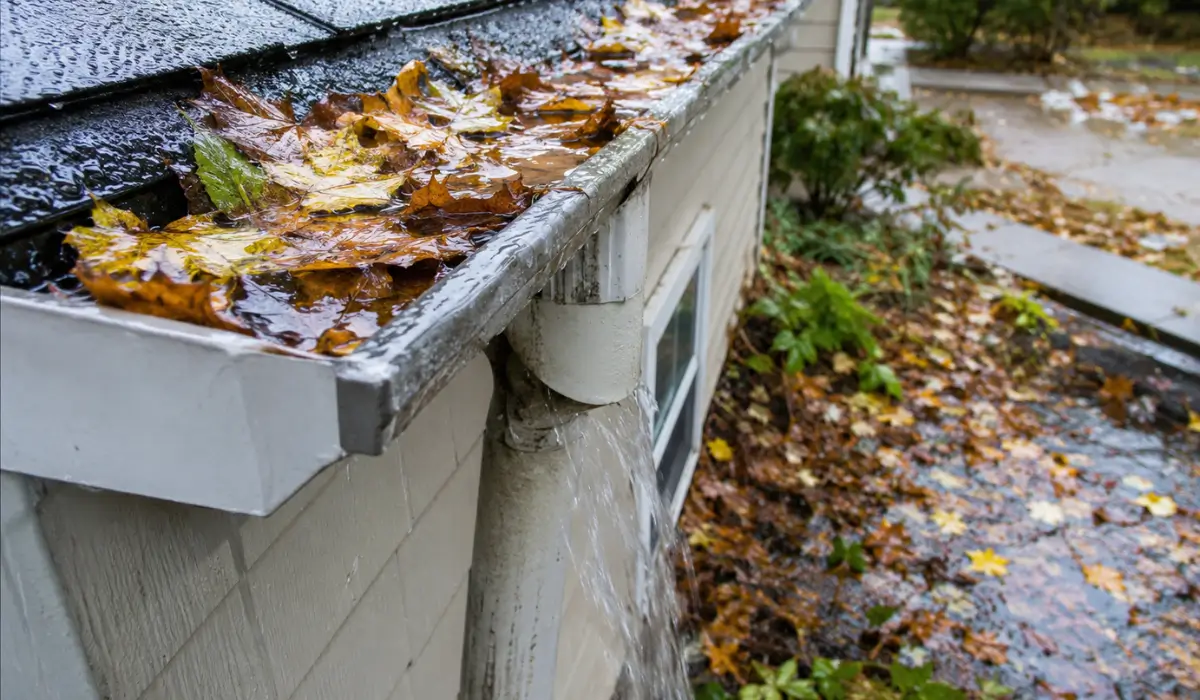
Are Falling Leaves Clogging Your Drainage System? Here’s What to Watch For
Falling leaves can clog more than just gutters. Falling leaves clogging your drainage system can restrict rain spouts, yard drains, and underground drainage, leading to overflow, standing water, and slow drainage around your home.
Bee Quick Plumbing and Sewer helps Naperville homeowners address plumbing, sewer, and drainage problems. During fall, where water slows, backs up, or collects can give us useful clues about which part of the drainage system needs attention.
Why Falling Leaves Create Bigger Problems Than Most Homeowners Realize
Wet leaves can pack around gutter outlets, rain spouts, drain grates, and catch basins. With falling leaves clogging your drainage system, smaller debris can also travel into connected drainage lines, turning an easy-to-see surface blockage into a restriction that is harder to locate.
Expert Insight
“One of the most common drainage mistakes homeowners make is assuming water disappears once it leaves the gutter. If underground drainage systems are blocked, that water often ends up right back at the foundation.”
— Bee Quick Drainage Specialist
That is why rain spout maintenance in Naperville IL involves more than checking whether the gutters look clean. The EPA’s stormwater management requirements address runoff and pollutants carried by stormwater, supporting the broader point that what happens along the water’s path matters beyond the gutter itself.
Gutter overflow, weak rain-spout discharge, standing water, and slow yard drains can all signal restricted flow. Our gutter and rain spout services address the roof-runoff portion of this connected system.
If accessible cleanup restores normal flow, seasonal debris may have been the problem. When the same symptom returns during ordinary rainfall, the restriction may be farther along the drainage route.
How Your Home's Drainage System Works Together
Your home’s exterior drainage works as a connected route, so water needs a clear path from the roof to a suitable discharge point. A problem in one part can change how water behaves somewhere else on the property.
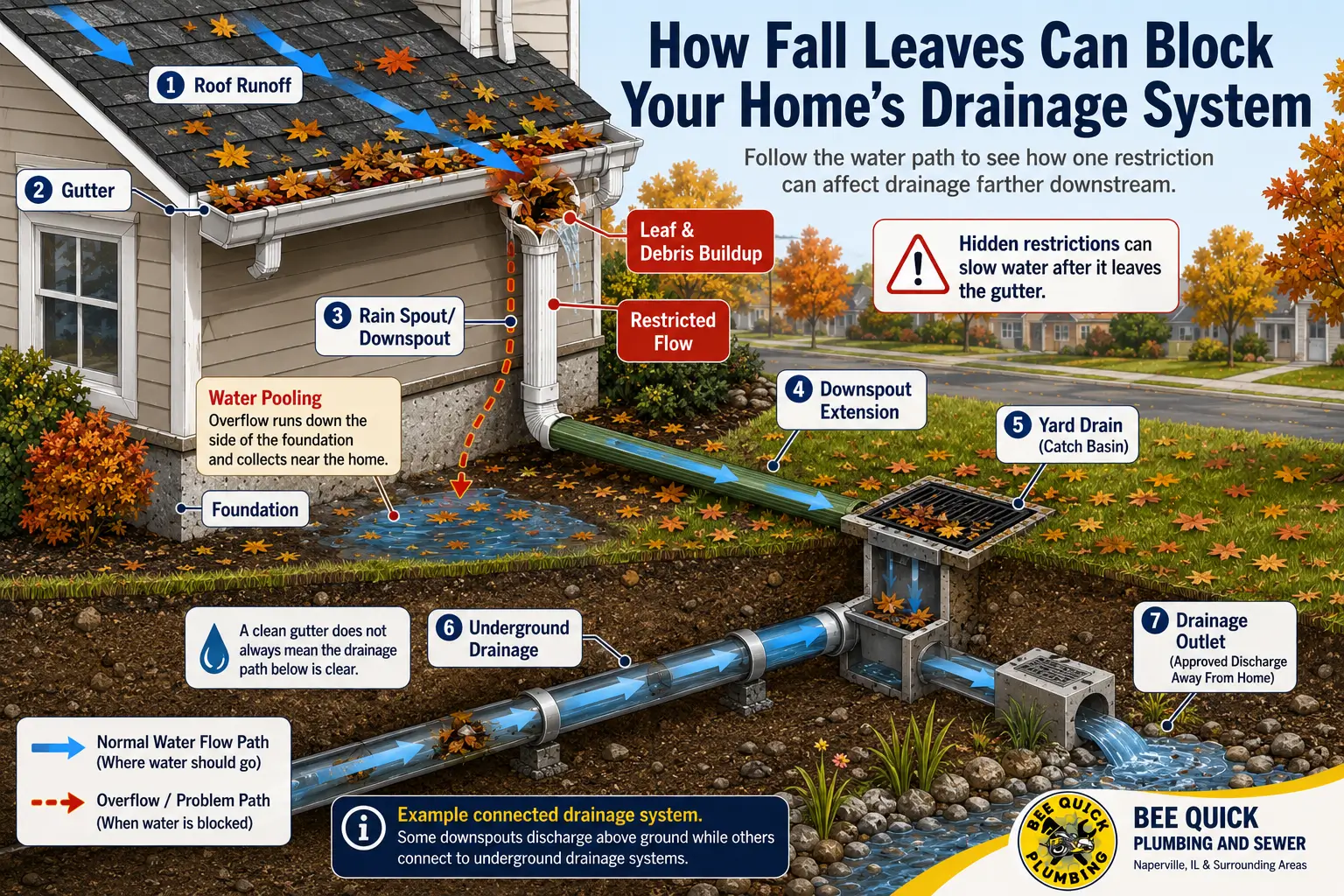
Some rain spouts discharge above ground, while others connect to underground lines. A restriction can cause overflowing gutters, pooling near the foundation, or slow drainage farther downstream even when the visible gutter is clean.
Our clogged yard drain warning signs cover problems farther along this route. From a plumbing standpoint, where water first stops behaving normally can help narrow down which part of the system deserves attention.
7 Signs of Falling Leaves Clogging Your Drainage System
Leaf-related drainage problems are often easiest to spot during or shortly after rain. Seven common signs are gutter overflow, slow rain spouts, foundation pooling, yard flooding, soil erosion, basement dampness, and foundation water stains.
One symptom does not prove leaves are responsible because several drainage conditions can create similar results. A new or recurring change from how your property normally handles rainfall provides a more useful clue.
Water Overflowing From Gutters
Overflow can mean water is not reaching or passing through the gutter outlet fast enough. Wet leaves may cover an outlet even when much of the remaining gutter looks clear.
If safe cleanup restores normal flow, the restriction was likely close to the visible gutter system. Continued overflow after cleaning can point to trouble farther along the drainage route.
Downspouts Draining Slowly
A rain spout with noticeably weaker discharge than nearby outlets may contain debris or connect to a restricted line. Rain spout debris removal in Naperville IL can therefore involve more than clearing leaves from the opening at the top.
Comparing rain spouts during the same rainfall can help identify which drainage route is behaving differently. A persistent difference after visible debris is removed deserves closer attention.
Standing Water Near the Foundation
New pooling beside a home means runoff is collecting where it normally should not remain. Rain-spout discharge, grading, covered drains, soil conditions, and other drainage problems can all contribute.
Water that repeatedly collects in the same area provides a better diagnostic clue than one puddle after an unusually severe storm. Its location can also help identify which nearby drainage components need checking.
Yard Flooding After Moderate Rain
A yard that suddenly holds water after rainfall it previously handled may have a covered inlet or restricted drainage route. Leaves, mulch, and other debris can reduce how quickly runoff reaches or enters a yard drain.
Soil saturation and grading also affect how quickly a yard drains, so standing water does not automatically mean there is a clog. A noticeable change from the property’s normal drainage pattern is the more useful clue.
Soil Erosion Around Landscaping
Runoff escaping its normal route can move mulch, wash away loose soil, and create small channels through landscaping. These patterns may appear below overflowing gutters or near drainage areas that are no longer moving water effectively.
Erosion does not locate the blockage by itself, but it can show where excess runoff has repeatedly traveled. Following that pattern can help narrow down where the drainage problem may begin.
Basement Dampness or Musty Odors
Basement dampness after rain can be related to exterior drainage, but foundation conditions, groundwater, grading, and plumbing leaks can also contribute. A musty odor can signal excess moisture without identifying its source.
Outdoor symptoms occurring at the same time provide better context. Repeated foundation pooling combined with new basement dampness deserves more attention than either symptom considered alone.
Water Stains on Foundation Walls
Water stains become more useful as a diagnostic clue when they appear with outdoor pooling, gutter overflow, or drainage backup. They can show areas where moisture has repeatedly traveled or collected.
A stain alone cannot confirm that leaves caused the problem. Looking at surrounding drainage symptoms helps avoid blaming visible leaf buildup for moisture that may have another source.
Why Blocked Rain Spouts Can Lead to Water Seepage Problems
A blocked rain spout can spill roof runoff beside the home instead of carrying it toward its normal discharge point. Repeated overflow can keep nearby soil wetter, especially when several fall rains occur before the area has time to dry.
The cause-and-effect path can look like this:
- Leaves restrict the rain spout.
- Water backs up or overflows.
- More runoff reaches soil beside the house.
- The surrounding soil remains wetter.
- Existing drainage or foundation weaknesses may become easier to notice.
When soil around a foundation becomes saturated, water pressure against below-grade walls can increase. This is commonly called hydrostatic pressure, but a blocked rain spout does not automatically mean water will enter the basement.
Grading, groundwater, foundation conditions, and other drainage factors still matter. The CDC’s mold and moisture information notes that mold can grow where moisture is present, which is another reason recurring indoor dampness deserves attention rather than being dismissed as a seasonal nuisance.
Areas Homeowners Commonly Forget to Inspect
A clean gutter does not confirm that everything below it is clear. Underground connections and low drainage points can collect material out of sight, so recurring symptoms deserve attention even after visible leaves are removed.
Underground Downspout Extensions
Leaves and smaller debris can enter an underground extension where the restriction is no longer visible from above. Water may then back up around the connection even though the exposed rain spout looks clear.
When that happens repeatedly, the next part of the drainage route may need closer inspection. Cleaning an already-clear surface opening will not correct a restriction farther inside the line.
Catch Basins
Catch basins collect sediment and organic debris throughout the year, gradually leaving less open space for runoff. Heavy fall leaf accumulation can add to material already inside the basin.
Removing accessible debris may restore drainage when the problem is limited to the basin. If a clean basin still drains slowly, the restriction may be farther downstream.
Drain Grates
Wet leaves can mat across drain grates after windy weather, restricting how quickly runoff enters the system. This surface blockage is often visible and may be corrected with safe routine cleanup.
If clearing the grate does not restore normal flow, the visible debris may not be the whole problem. Water collecting around a clear grate can indicate a restriction in the connected drainage route.
Yard Drain Inlets
Leaves, mulch, grass, and loose soil naturally move toward low yard-drain inlets as runoff crosses the property. Our local plumbing service areas include Naperville and surrounding communities.
A covered inlet may simply need accessible debris removed. When it remains slow after cleanup, checking farther into the drainage line becomes more useful than repeatedly clearing the same surface area.
How Professional Drain Inspections Help Identify Hidden Problems
When visible drainage areas are clear but symptoms of falling leaves clogging your drainage system continue, an inspection can help distinguish ordinary debris from roots, damaged piping, or another hidden restriction.
Drain cleaning services may correct appropriate blockages, but identifying the likely cause should come first. Depending on access, an inspection can include checking connections, comparing flow, examining accessible piping, and using camera equipment when it can answer a specific diagnostic question.
Bee Quick Plumbing and Sewer uses camera equipment to televise sewer lines when appropriate. Our sewer line cleanout information also shows why suitable access matters when a blockage or damaged area is out of sight.
The goal is not to assume every slow drain needs aggressive cleaning. Determining whether the problem is debris, roots, damaged pipe, or another condition helps identify what actually needs attention.
The Cost of Ignoring Fall Drainage Problems
Recurring drainage trouble can keep sending water into areas that were not meant to hold it. Not every leaf blockage causes serious property damage, but a persistent change in water flow should not be dismissed because the visible gutters were cleaned.
| Area | What You May Notice |
|---|---|
| Foundation | Wetter surrounding soil |
| Basement | Additional moisture |
| Landscaping | Erosion or displaced mulch |
| Lawn | Standing water |
| Drainage system | Continuing backup or slow flow |
Water management around a home matters beyond keeping the yard dry. FEMA’s flood safety tips reinforce the importance of recognizing flood risks and taking practical precautions before water becomes a more serious problem.
If gutter cleaning stops roofline overflow but the same part of the yard floods during the next moderate rain, the gutter probably was not the entire problem. That pattern can justify looking farther along the drainage route.
Foundation cracking or settlement should not automatically be blamed on leaves either. Drainage, soil, grading, groundwater, and structural conditions can interact, so the actual cause matters before deciding on a repair.
Fall Drainage Maintenance Checklist
Fall drainage maintenance works best when the property is checked in the same direction rainwater normally travels. Starting with safe, accessible components can help separate routine seasonal buildup from a problem farther into the system.
- ✓ Remove accessible leaves from gutters.
- ✓ Inspect visible rain-spout openings.
- ✓ Clear drain grates.
- ✓ Remove loose debris from catch basins.
- ✓ Check for standing water.
- ✓ Watch rain-spout discharge during rainfall.
- ✓ Inspect accessible yard-drain inlets.
- ✓ Note basement moisture after rain.
- ✓ Recheck after another heavy leaf fall.
- ✓ Arrange an inspection if drainage problems persist.
Our frequently asked plumbing questions address other common plumbing concerns homeowners may encounter throughout the year.
One cleanup may not last for the entire fall because new leaves and windy weather can cover an opening again. How the drainage system performs during the next rainfall is a better test than assuming one cleaning solved the problem.
When to Call a Professional
Professional help makes sense when safe surface cleaning does not restore normal drainage or the same problem continues after ordinary rain. Repeated foundation pooling, gutter overflow, slow yard drains, basement seepage, or backup around an underground connection can justify closer inspection.
Exterior rainwater drainage and household sewer lines are not the same system, even though homeowners may describe both as drains. Sewer inspection becomes more relevant when symptoms point toward wastewater plumbing inside the home.
Our drain gurgling warning signs cover one symptom that can occur in household plumbing. Gurgling, slow indoor fixtures, and other wastewater symptoms shift the diagnostic focus away from an exterior leaf blockage.
A search for clogged drain repair near me may lead to clogged drain repair, but whether that service is appropriate still depends on the blockage’s location and cause. The better decision comes from identifying what is interfering with flow before choosing the repair.
FAQ Section
Can falling leaves really cause basement water problems?
Yes, falling leaves can contribute when they restrict exterior drainage and leave more runoff near the foundation. Other conditions can also cause basement moisture, so surrounding drainage symptoms should be considered before assuming leaves are the only source.
How often should rain spouts be cleaned in the fall?
There is no single schedule that fits every property. Homes surrounded by more leaf-dropping trees may need several checks during fall as new leaves continue collecting after wind and rain.
What happens if underground drainage pipes become clogged?
Water may drain slowly, back up around a connection, or collect outside when an underground pipe becomes restricted. Debris, roots, damaged piping, and other conditions can create similar symptoms, so identifying the cause matters.
How do professionals inspect underground drainage systems?
An inspection may include checking visible components, observing water flow, examining accessible piping, and using camera equipment when the line and access make it useful. The inspection method should match the system and symptoms being investigated.
What’s the difference between gutter cleaning and drainage system maintenance?
Gutter cleaning removes debris where roof runoff is first collected. Drainage system maintenance also considers whether that water continues moving properly after leaving the gutter.
Get the Drainage Problem Checked
Clearing visible leaves should restore steady drainage. Overflow, pooling, slow drainage, or basement moisture that returns afterward points to a problem worth tracing farther along the water path.
Bee Quick Plumbing and Sewer checks where the flow is being restricted before recommending the next step. For a problem that keeps coming back, schedule your drainage inspection or call (630) 923-1942 and have our licensed and bonded team take a closer look.
With more than nine years of plumbing-trade experience, we’re available 24/7 with no hidden extra fees for after-hours service. The right repair starts with knowing what is actually blocking the water.