
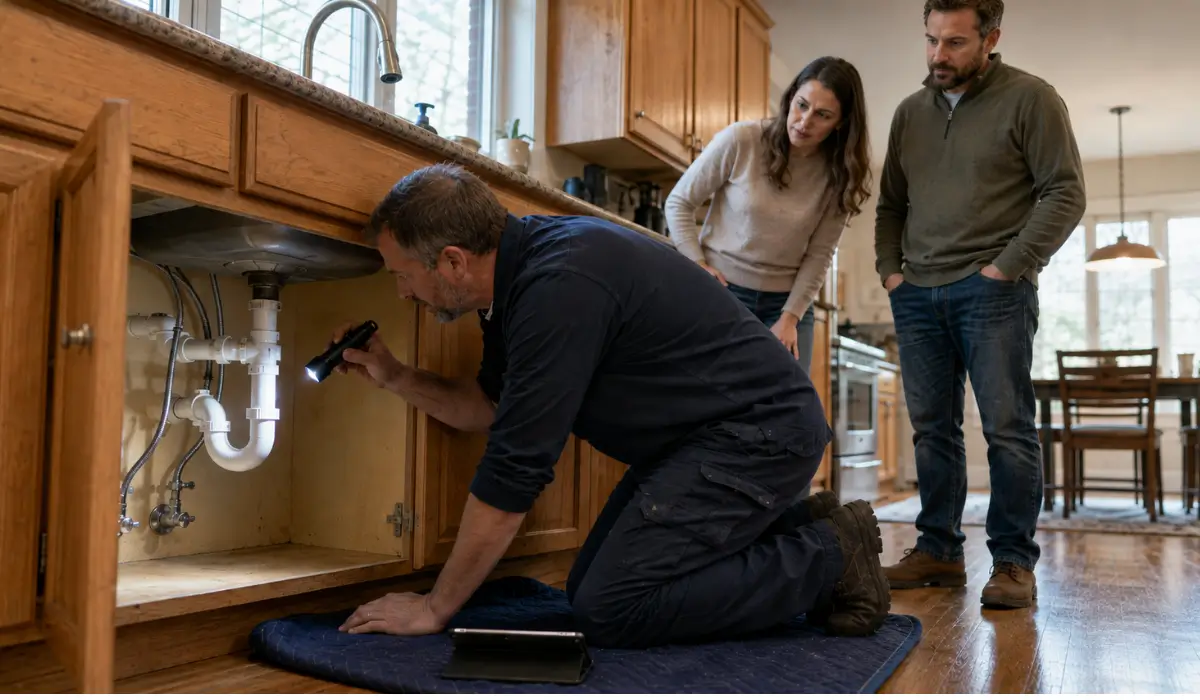
Buying a Home This Fall? Don’t Skip the Plumbing Inspection
Buying a home this fall? A standard home inspection may not uncover every hidden sewer, pipe, or plumbing concern. A plumbing inspection looks more closely at leaks, aging plumbing, drainage trouble, and questionable previous work before you take ownership.
The goal is to understand whether a concern looks like normal maintenance, needs further investigation, or deserves attention before closing. A separate plumbing evaluation becomes more useful when a home has older plumbing, an unclear sewer history, several related symptoms, or concerns identified during the general inspection.
Bee Quick Plumbing and Sewer helps Naperville-area buyers understand what those signs may mean before closing.
Why Plumbing Problems Can Become Expensive Surprises for New Homeowners
A home can look updated while plumbing trouble remains out of sight. Water lines may run behind finished walls, and the main sewer line is underground, so remodeled rooms tell you little about the pipes serving them.
Why plumbing problems can be missed:
- Limited visibility: Pipes may be behind walls, cabinets, floors, or underground.
- Limited symptoms: Some problems show few obvious signs during a showing.
- Limited scope: Parts of the system may fall outside a general inspection’s scope.
- Limited use: Problems may become more noticeable under normal household use.
New fixtures do not mean new plumbing. Weak flow at one faucet may be a local issue, while weak flow at several fixtures gives us a reason to look farther into the water-supply system.
What's the Difference Between a Home Inspection and a Plumbing Inspection?
A general home inspection reviews many property systems. A professional plumbing evaluation focuses on water supply, drainage, fixtures, water-heating equipment, and plumbing-specific warning signs.
The American Society of Home Inspectors includes accessible plumbing components in its home inspection standards. The exact scope can vary by inspector, property, and inspection agreement.
| Standard Home Inspection | Professional Plumbing Inspection |
|---|---|
| Reviews many home systems | Focuses specifically on plumbing |
| Checks accessible components | Looks more closely at plumbing performance |
| May identify warning signs | Investigates plumbing-specific concerns |
| Sewer camera work may not be included | Camera work can be considered when appropriate |
A home inspection and a plumbing inspection are not the same thing. A general inspector may identify a warning sign, while a plumber can investigate the plumbing connected to it.
A closer plumbing evaluation makes sense when the general inspection identifies a concern, several fixtures show related symptoms, the sewer history is unknown, or previous work raises questions.
8 Plumbing Problems Buyers Should Watch For
Homebuyers do not need to diagnose plumbing problems themselves. A warning sign tells you where to look more closely; it does not identify the cause by itself.
One affected fixture may point to a local problem. Several affected fixtures can point to the system they share. The pattern helps determine where further investigation may be useful.
Hidden Pipe Leaks
Watch for: Water stains, damp cabinets, musty odors, warped materials, or fresh paint patches.
A stain alone does not tell you whether moisture is active or where it came from. Location, moisture conditions, and repair history help determine whether plumbing deserves closer investigation.
The EPA identifies dripping fixtures, toilets, and other common household leaks as sources of wasted water. Repair records may also show whether visible damage came from an older problem that was corrected.
Aging Water Lines
What matters: Material, visible condition, previous repairs, and current performance.
Older water lines can develop corrosion, leaks, or internal restrictions, but age alone is not enough to recommend replacement. For a buyer, the better question is not simply “How old are the pipes?” but “How are they performing now, and what repair history is available?”
Our water line warning signs cover symptoms that may indicate a broader supply-line concern.
Sewer Line Damage
Watch for: Related drainage symptoms that suggest a problem beyond one fixture.
A remodeled bathroom can still drain into an older underground sewer. Roots, cracks, or shifted pipe can interfere with drainage. Our hidden sewer warning signs cover symptoms that may point farther downstream.
Inspection insight: When related symptoms suggest the problem may be farther downstream, viewing the accessible sewer line can give us better information than judging its condition from the home’s finishes or age.
Slow Drains Throughout the Home
Pattern to notice: One slow drain versus several affected fixtures.
One slow sink may indicate a nearby restriction. Several slow drains, gurgling toilets, or backups can point to a problem farther into shared drainage piping. Buildup, roots, obstructions, and damaged pipe can produce similar symptoms.
For buyers, the pattern matters: Ask which fixtures are affected, how often the problem occurs, and whether backups have happened before.
Outdated Plumbing Materials
What matters: Condition and performance, not age alone.
Galvanized water pipe, cast iron drainage pipe, and other older materials are not automatically defective. Material identifies what you’re looking at; condition and performance tell you whether it deserves attention.
Corrosion, leakage, poor performance, repeated repairs, or a mix of old and new piping can add useful context.
Water Heater Concerns
Watch for: Rust, moisture, worn connections, unusual sounds, or inconsistent hot water.
Visible condition, connections, performance, age, and service history give a buyer more useful context than age alone. Evidence of previous leakage can also help show the unit’s current condition.
Improper DIY Plumbing Repairs
Look more closely when: Piping is unsupported, connections appear makeshift, fittings seem unusual, or drain configurations raise questions.
When remodeled plumbing looks questionable, compare what is visible with available permits, repair records, and actual system performance before concluding. Not every unfamiliar installation is improper.
Existing Code Violations
Focus on documentation: An issued correction identifies a specific concern; appearance alone does not.
If a local inspector has issued a correction notice, village code violation help can focus on the specific items identified rather than assumptions about how the plumbing looks.
Why Sewer Camera Inspections Are Especially Valuable Before Buying a Home
A sewer camera inspection can be useful when symptoms or property history give us a reason to investigate an accessible underground line. Many sewer conditions cannot be identified from fixtures alone.
A camera may reveal:
- Root intrusion
- Cracked pipe
- Shifted connections
- Low areas where water collects
- Heavy buildup
- Previous repairs or repair failures
A slow drain tells us what is happening at the fixture. Camera footage can help show what is happening inside the line. A sewer camera inspection can clarify the condition when the evidence points underground.
Expert Insight
A remodeled home can still have an older sewer line underground. When its condition is unknown, looking inside the accessible line can reveal roots, cracks, shifted pipe, buildup, or previous repairs that are not visible elsewhere.
– Bee Quick Plumbing and Sewer
Camera footage is evidence, not a prediction. Pipe material, depth, location, performance, and the extent of damage still matter when deciding what, if anything, should happen next.
What Can Affect the Scope of Sewer Line Work?
The scope of sewer work depends on what is wrong and what it takes to reach and correct the condition. Depth, access, pipe material, damage, location, and what sits above the line can all affect the work involved.
A sewer line inspection helps define the condition before anyone assumes replacement is necessary. Depending on the findings, work may involve:
- Clearing obstructions
- Repairing damaged pipe
- Replacing pipe when necessary
- Accessing buried sections
- Restoring disturbed surfaces
A sewer line repair can therefore mean very different work from one property to another. Buildup may call for cleaning, while physical pipe damage may require repair. The repair should fit the finding, not a worst-case assumption.
Understanding Plumbing Code Violations Before You Buy
Finished basements, added bathrooms, moved fixtures, and water-heater replacements can raise questions about previous plumbing work.
Potential concerns include unpermitted work, improper venting, questionable drainage configurations, water-heater installation concerns, and missing or inaccessible cleanouts.
The City of Naperville publishes building permits issued reports that buyers can consult when previous work raises questions about whether a permit was issued.
A permit record can help establish whether a permit was issued for previous work; it does not by itself establish the current condition of that plumbing. A missing permit record does not by itself prove defective plumbing. An issued correction notice identifies specific items requiring attention.
Municipal, insurance, contract, or resale questions should be confirmed with the appropriate professional or authority.
Questions Every Homebuyer Should Ask About the Plumbing System
Plumbing history can reveal information that a walkthrough cannot.
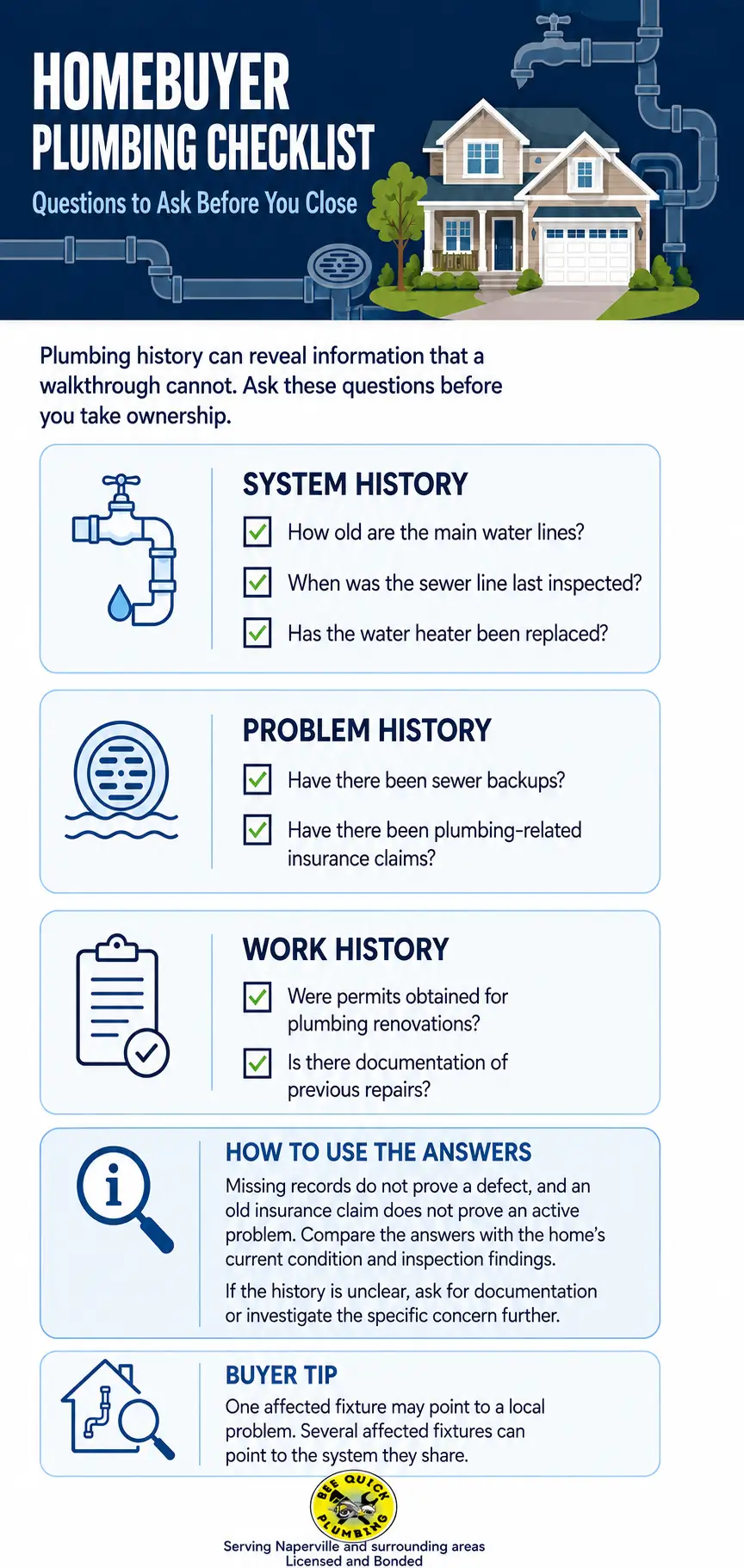
Homebuyer Plumbing Checklist
System history
- How old are the main water lines?
- When was the sewer line last inspected?
- Has the water heater been replaced?
Problem history
- Have there been sewer backups?
- Have there been plumbing-related insurance claims?
Work history
- Were permits obtained for plumbing renovations?
- Is there documentation of previous repairs?
How to use the answers: Missing records do not prove a defect, and an old insurance claim does not prove an active problem. Compare the answers with the property’s current condition and inspection findings.
If the history is missing, unclear, or conflicts with what is visible, that can give you a reason to ask for documentation or investigate the specific concern further.
Why Fall Is a Practical Time for Plumbing Inspections
For fall homebuyers, the practical advantage is timing. Plumbing concerns identified before closing can be evaluated before colder Illinois weather arrives and before you take responsibility for the property.
A fall evaluation can put more attention on drainage performance, exposed plumbing, water-heater condition, and repair needs before winter. If an inspection identifies a concern, finding it before closing also gives the buyer time to understand the condition and discuss appropriate next steps with their transaction professionals.
For buyers considering plumbing inspections in Naperville, IL, colder weather adds seasonal context, but the property’s actual condition matters more than the season itself.
This version preserves the outline intent:
- Seasonal concerns: retained
- Drainage before freezing weather: retained without claiming freezing weather itself tests the system
- Repairs before closing: retained
- Naperville/local relevance: retained
- Easier scheduling before winter rush: omitted unless Bee Quick can verify that operationally
- Short negotiation window: reframed around discussing next steps because negotiation rights and deadlines are transaction-specific
I would keep “Practical” rather than “Ideal.” It is more defensible and fits the article’s restrained, evidence-first tone.
What Happens During a Professional Plumbing Inspection?
A professional plumbing evaluation starts with accessible components and fixture performance, then follows broader drainage or sewer concerns when the evidence calls for it.
The exact scope depends on the property, accessible components, observed conditions, and the reason for the evaluation.
Typical Inspection Process
- Visual evaluation: Check accessible pipes, fixtures, connections, and signs of moisture.
- Fixture testing: Review operation and drainage.
- Water assessment: Evaluate pressure or flow concerns when relevant.
- Drainage evaluation: Consider slow drains, backups, and gurgling together.
- Sewer inspection: Add a sewer inspection when symptoms or property history justify viewing the line.
- Findings: Review what was observed, why it matters, and what may need attention.
Bee Quick Plumbing and Sewer brings more than nine years of trade experience to plumbing and sewer work in the Naperville area. That experience informs a practical approach: identify what the system is showing, investigate where the evidence points, and recommend work that fits the finding.
Inspection limit: No inspection can reveal every concealed condition or guarantee that a working component will never fail. Buyers should leave understanding what was found, why it matters, and what may need attention next.
FAQ
Is a plumbing inspection worth it when buying a home?
A plumbing inspection can be worth it before buying when the property’s age, repair history, symptoms, or general inspection findings leave plumbing questions unanswered.
Should I get a sewer camera inspection before buying?
A sewer camera inspection can be useful before buying when the sewer history is unknown or multiple symptoms suggest a possible main-line concern. Not every property automatically needs one.
Why can sewer repair scope vary from one home to another?
Sewer repair scope varies with the condition, depth, access, location, and work required to correct the problem. An inspection helps establish those factors before a property-specific recommendation is made.
Can plumbing code violations affect a home purchase?
Documented plumbing corrections may require attention before or after a purchase, depending on the circumstances. Contract, insurance, permit, or legal questions should be confirmed with the appropriate professional or authority.
What if plumbing issues are found before closing?
Finding a plumbing issue does not automatically mean the entire system needs replacement. Maintenance, further investigation, limited repair, and replacement are different situations buyers can discuss with their transaction professionals.
Make the Plumbing Condition Part of Your Buying Decision
A pre-purchase plumbing inspection can help separate normal wear and manageable maintenance from conditions that need more investigation or may justify repair before you take ownership. An older pipe or slow drain is not automatically a major problem. Current condition, performance, repair history, and available evidence should guide the decision.
Bee Quick Plumbing and Sewer is licensed and bonded, brings more than nine years of trade experience, and serves Naperville and surrounding areas. Request a plumbing evaluation if plumbing or sewer concerns remain unanswered before closing. We’ll focus on what we can observe, explain what the findings mean, and help you understand what may need attention next.