
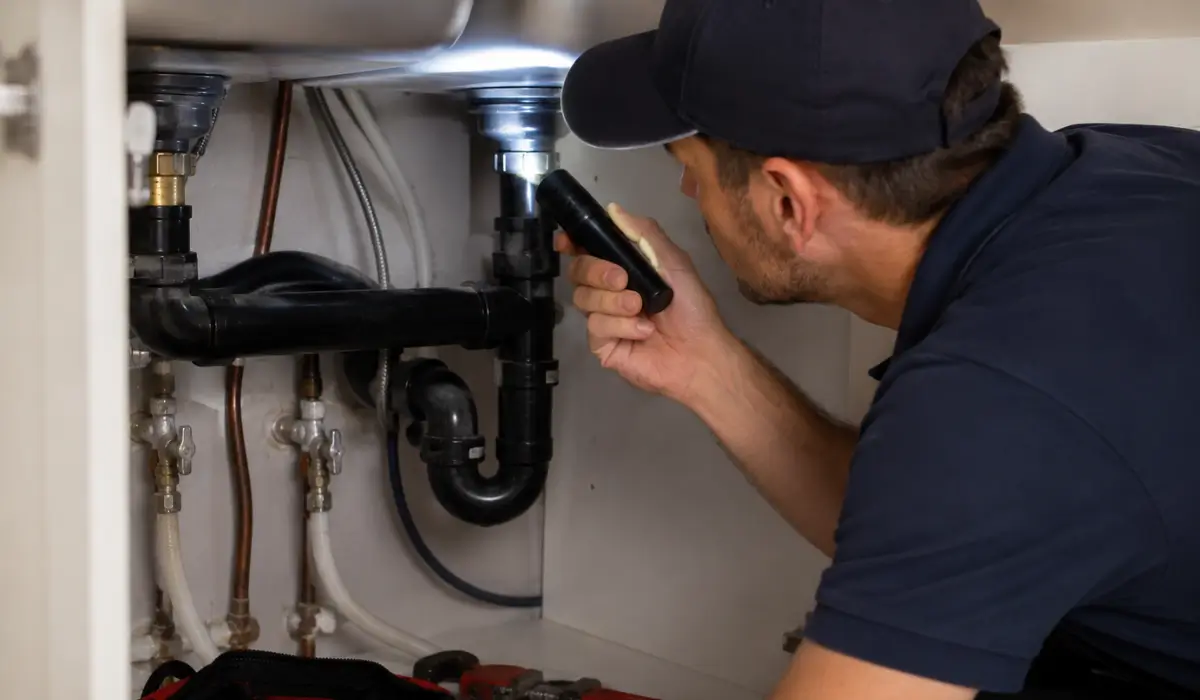
Fall Plumbing Prep Checklist: What to Do Before Temperatures Drop
Fall is a good time to check your plumbing before freezing weather puts more stress on pipes and equipment. This Plumbing Prep Checklist helps Naperville homeowners prepare drains, sump pumps, sewer lines, water heaters, and outdoor plumbing before winter.
Bee Quick Plumbing and Sewer handles plumbing and sewer work throughout Naperville and surrounding areas. We recommend starting with changes you can see, hear, or feel, such as leaks, slow drains, unusual sounds, weak hot water, or a sump pump that is not working normally.
Good fall maintenance is about catching a real problem while there is time to deal with it properly.
Why Fall Plumbing Preparation Matters
Some winter plumbing problems begin developing before freezing weather arrives. Small leaks, restricted drains, exposed outdoor plumbing, and unreliable equipment can already show warning signs during fall.
Early checks give homeowners time to respond before cold weather makes repairs more disruptive. September is a practical month for preventive work in Naperville, although actual weather and plumbing conditions matter more than a fixed date.
Homeowners who completed a summer plumbing checklist can compare earlier conditions with what they see now. Changes between seasons can help reveal a developing problem.
Fall Plumbing Prep Checklist Task #1: Schedule a Professional Plumbing Inspection
A professional inspection can uncover leaks, aging fixtures, drainage concerns, water-pressure problems, and sewer warning signs before colder weather arrives. Starting with the overall system also helps separate routine maintenance from a problem that needs diagnosis.
Why start here? One slow sink can point to a different problem than several fixtures draining slowly. Likewise, a dripping faucet is different from unexplained moisture around a pipe or fixture.
The EPA’s household leak information identifies toilets, faucets, showerheads, and other fixtures as common places to check for leaks.
A fall plumbing inspection may include:
- Faucets, toilets, shutoff valves, and visible water lines
- Outdoor faucets and exposed plumbing
- Visible leaks or moisture
- Drain performance
- Water-pressure concerns
- Sewer warning signs
The exact inspection depends on the home and symptoms present. Older plumbing does not automatically mean something needs replacement.
Our owner, Elias, has more than nine years of plumbing-trade experience and started his apprenticeship at his dad’s company at 18. His plumbing experience and background shape how we work today: identify the problem and focus on what actually needs fixing.
Expert Insight from Elias
“From my experience in the plumbing trade, fall is a good time to catch developing plumbing problems while there is still time to address them before colder weather arrives.”
— Elias, Owner, Bee Quick Plumbing and Sewer
How the Plumbing Prep Checklist Helps Prioritize Problems
Three details are especially useful when diagnosing plumbing trouble: what changed, where it happened, and whether it keeps happening. A dripping faucet, recurring sewer backup, and sump pump that will not activate point toward different parts of the system.
These observations do not replace professional diagnosis, but they help narrow down where to start. Homeowners dealing with several concerns can review our plumbing and sewer services; plumbing inspections in Naperville IL can then help determine which issue deserves attention first.
Fall Plumbing Prep Task #2: Inspect and Test Your Sump Pump
A sump pump needs to activate and move water through its discharge line. Hearing the motor run does not prove the whole system is working.
Why September works well: Fall rain and changing groundwater conditions can increase the amount of water entering some sump pits. Testing beforehand gives you time to deal with a problem before the pump is under heavier demand.
Sump pump checklist:
- Test the float or activation mechanism.
- Confirm water moves through the discharge line.
- Check the pit for debris.
- Listen for unusual sounds.
- Test backup equipment separately, if installed.
Manufacturer instructions should take priority because sump systems differ. Common problems include a failed motor, faulty switch, restricted discharge line, weak backup battery, or debris.
The need for sump pump repair & replacement should come from the diagnosis rather than an assumption that the pump itself has failed. What we often see is that the part causing the symptom is not always the part a homeowner first suspects.
Fall Plumbing Prep Task #3: Schedule Drain Cleaning Before Leaf Season Peaks
Fall is a practical time to address drains that are already slow, gurgling, smelling unusual, or repeatedly clogging. Household drain restrictions and outdoor leaf buildup are separate problems, even when both become noticeable during fall.
Why drains become vulnerable: Grease, food waste, hair, soap residue, and other material can build up inside household drains over time. Leaves mainly affect gutters and outdoor drainage, so the location of the problem matters.
Warning signs include:
- Slow drainage
- Gurgling
- Recurring clogs
- Sewer-like odors
- Water backups
- Several drains slowing together
Drain cleaning services should match the type and location of the restriction. Rodding and jetting are different methods, and neither is automatically right for every slow drain.
In many real cases, where a clog occurs and how often it returns tells us more than the clog itself. A recurring restriction deserves investigation rather than repeated temporary clearing.
Fall Plumbing Prep Task #4: Consider a Sewer Inspection Before Winter
A sewer inspection can make sense when recurring backups or several affected drains suggest a problem farther down the system. Root intrusion, blockages, damaged pipe, and separated joints are some conditions that can interfere with normal flow.
Why check before winter? Cold weather does not automatically cause sewer damage. The advantage of checking an existing warning sign in fall is having more time to understand the problem and decide what should happen next.
Benefits of a sewer camera inspection: This type of inspection lets a plumber view accessible areas inside the sewer line and may reveal:
- Root intrusion
- Cracks or damaged sections
- Separated joints
- Blockages
- Other visible restrictions
A camera finding does not automatically mean the sewer line needs replacement. The type, location, and extent of the problem determine whether cleaning, repair, further investigation, or another response makes sense.
The Illinois plumbing program contains state plumbing rules and licensing information. Local requirements may also apply to certain work.
Bee Quick Plumbing and Sewer uses sewer-camera equipment to televise sewer lines and locate possible causes of problems. A sewer inspection is especially useful when recurring symptoms create a reason to look inside.
Detect problems early: The camera gives us evidence instead of forcing a guess about a buried line. That can help identify a developing issue before it becomes a more disruptive problem.
Avoid emergency repairs when possible: Early inspection cannot guarantee that a future backup will be prevented. It can, however, give a homeowner more information and time to make a repair decision.
Fall Plumbing Prep Task #5: Make Sure Your Water Heater Is Ready for Increased Demand
Fall is a practical time to check whether the water heater produces hot water consistently without leaking, discoloration, or unusual sounds.
Why demand can increase: Colder incoming water must be heated farther to reach the desired temperature. Household hot-water use can also change as temperatures fall or guests visit.
Warning signs include:
- Inconsistent hot water
- New or unusual noises
- Rust-colored or discolored water
- Visible leaking
- Repeated loss of hot water
- Noticeable performance changes
Condition and performance matter more than age alone. An older water heater does not automatically need replacement.
Repair may make sense when the problem can reasonably be fixed and the rest of the equipment is in suitable condition. Water heater installation becomes a stronger consideration with significant tank leakage, major failure, poor overall condition, or when repair is no longer practical.
Based on actual scenarios, the better decision starts with identifying the failure rather than replacing equipment simply because it is older.
Don't Forget Outdoor Plumbing Components
Outdoor plumbing deserves attention because faucets, hoses, exposed pipes, gutters, and downspouts face direct exposure to colder weather. The fall check should focus on leaks, trapped water, and drainage.
Outdoor faucets: Check for dripping, visible damage, and problems with accessible shutoffs.
Hose connections: Disconnect garden hoses before freezing conditions and inspect hose bibs and connections.
Drainage systems: Remove leaves and debris, then check that gutters and downspouts can carry water away from the house.
The Red Cross frozen pipe precautions include additional cold-weather steps for household plumbing.
Homeowners can check our Naperville-area service locations when professional plumbing work is needed. A simple outdoor review can catch visible trouble before freezing weather limits your options.
Common Fall Plumbing Mistakes Homeowners Make
Most fall plumbing mistakes come from waiting too long or assuming a symptom tells the whole story. The better approach is to pay attention when something changes or keeps returning.
| Common Mistake | Why It Matters |
|---|---|
| Waiting for freezing weather | Leaves less time for outdoor plumbing work |
| Ignoring slow drains | A restriction may continue developing |
| Skipping sump pump testing | An operating problem can remain hidden |
| Assuming the water heater is fine | Hot water alone does not rule out trouble |
| Waiting for complete failure | Early warning signs can be missed |
The fall plumbing maintenance tips cover other seasonal checks around the home.
Preventive maintenance cannot guarantee that an emergency will never happen. Its real advantage is giving homeowners more information and more time to make a sensible decision.
Your September Plumbing Maintenance Timeline
September gives Naperville homeowners a simple way to organize fall preparation. Active leaks, backups, or failed equipment should take priority over the calendar.
Early September: Plumbing inspection and attention to slow or recurring drains.
Mid-September: Sump pump testing and sewer-camera inspection when symptoms justify one.
Late September: Water-heater evaluation, outdoor faucets, hoses, exposed plumbing, gutters, and drainage.
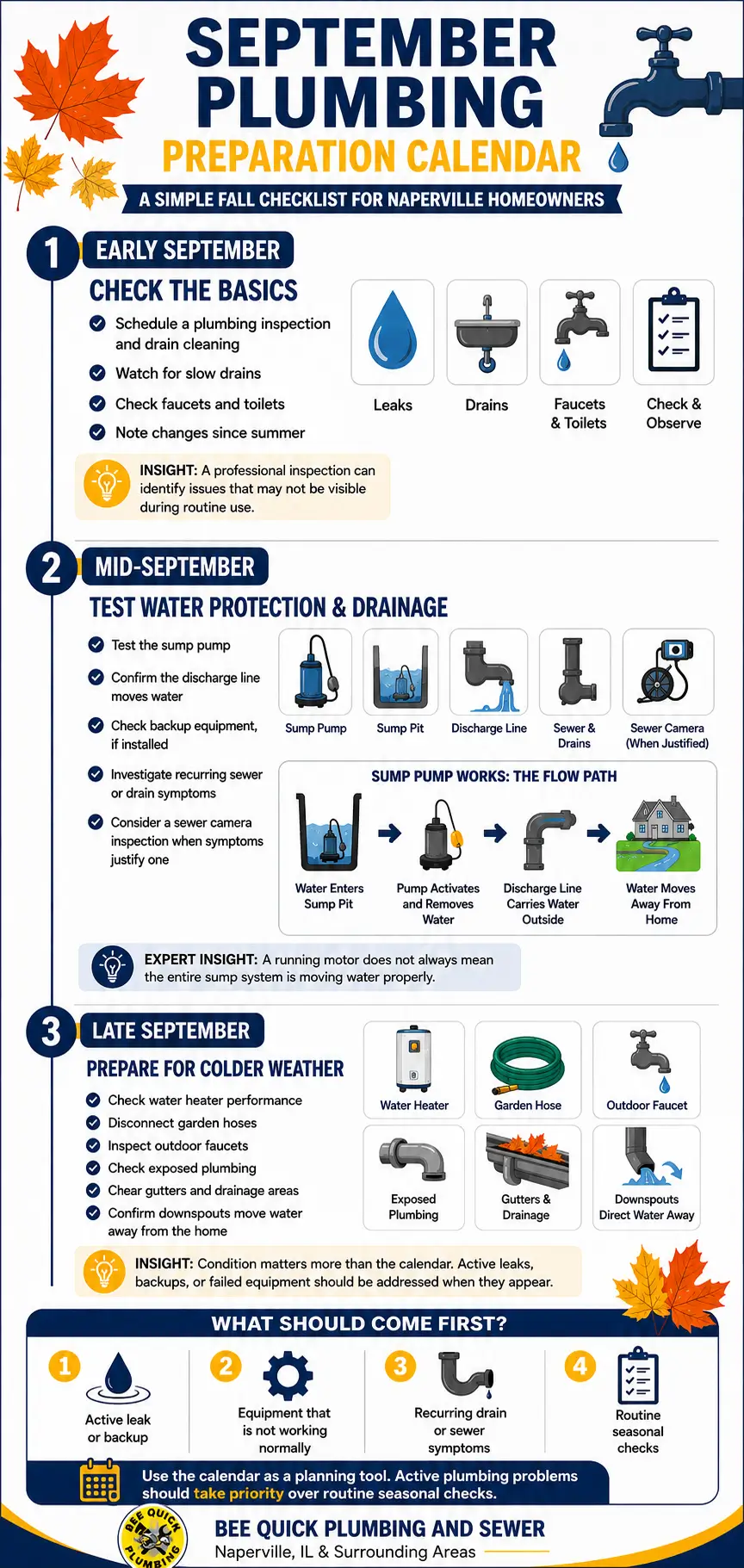
Homeowners leaving a property for an extended period can also review our plumbing shutdown steps. Weather and actual plumbing conditions should always determine which task receives attention first.
Fall Plumbing Preparation FAQs
When should I start preparing my plumbing for winter?
September and early fall are practical times in Naperville. An active leak, backup, or equipment failure should be addressed when it happens rather than waiting for a seasonal date.
Is a sewer inspection necessary every year?
Not for every home. Older sewer systems, recurring backups, several affected drains, previous sewer trouble, or mature trees near the sewer route can create a reason to consider periodic inspection.
How often should a sump pump be tested?
Follow the manufacturer’s testing instructions because equipment differs. Testing before seasons when the pump may be needed also helps uncover operating problems.
Why inspect a water heater before winter?
Fall gives homeowners time to investigate leaking, unusual sounds, discoloration, or changes in hot-water performance before colder-weather demand increases.
What is the most important fall plumbing maintenance task?
Start with an existing symptom. Without an obvious problem, a broader plumbing inspection can help identify what is working normally and what deserves attention.
Additional homeowner questions are covered in our common plumbing FAQs.
Get Your Naperville Plumbing Ready for Fall
Some fall checks are simple for homeowners, while recurring clogs, sewer symptoms, leaking equipment, failed sump pumps, and plumbing repairs need proper diagnosis. Bee Quick Plumbing and Sewer is licensed and bonded, has more than nine years of plumbing-trade experience, and is available 24/7 with no hidden extra fees for after-hours service.
If your plumbing prep checklist turns up a problem, request fall plumbing service or call for plumbing help at (630) 923-1942. We will look at what is happening and focus on the plumbing work your home actually needs.